A Practical AI Strategy for SMEs in Kenya and Across Africa
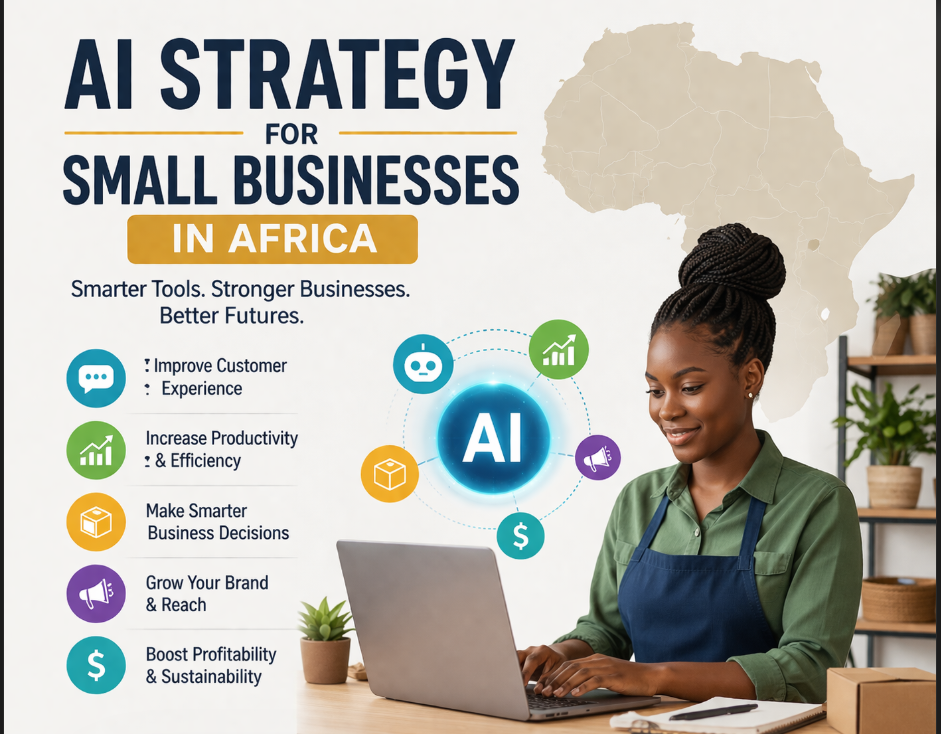
Artificial Intelligence is no longer a future concept for African businesses. It is now a practical tool that small businesses can use today to increase revenue, reduce costs, and compete more effectively. Across Kenya and the wider African market, a clear shift is happening:
The most successful SMEs are not just adopting AI tools — they are building AI into how their businesses operate daily. This guide breaks down how small businesses in Africa can use AI today, with practical examples and a step-by-step strategy you can implement immediately.
Why AI Matters for Small Businesses in Africa
In the past, digital transformation for SMEs meant:
- Setting up accounting software
- Creating a website
- Opening social media pages
- Digitizing basic records
Today, that is no longer enough. Modern businesses are using AI to:
- Respond to customers instantly
- Predict demand before it happens
- Automate repetitive work
- Improve marketing performance
- Make better financial decisions
This is why searches like:
“AI for small business in Kenya”
“digital transformation for SMEs in Africa”
“how to use AI in business”
are rapidly increasing.
Where African SMEs Are Losing Money Today
Many small businesses don’t realize they are losing revenue due to inefficiencies that AI can fix.
The most common gaps are:
1. Slow Customer Response
Missed WhatsApp or phone enquiries = lost sales
2. Poor Inventory Decisions
Overstocking or stockouts reduce cash flow
3. Inconsistent Marketing
Irregular posting leads to low visibility
4. Weak Financial Tracking
No clear insight into profits, costs, or trends
5. Lack of Business Data
Decisions are based on guesswork, not insights
👉 The good news: AI can solve all of these — affordably.
A Step-by-Step AI Strategy for Small Businesses in Africa
Instead of random experimentation, SMEs should follow a structured AI adoption roadmap.
Phase 1: Automate Customer Communication (Quick Wins)
Customer response speed is one of the biggest competitive advantages today.
AI tools integrated with WhatsApp Business or websites can:
Answer FAQs instantly
Share pricing and product details
Confirm orders automatically
Book appointments
Provide 24/7 customer support
Example (Kenya Context)
A hardware shop in Nakuru or Kisumu can use AI to:
Respond instantly to cement or steel price enquiries
Share delivery options
Capture orders even outside business hours
👉 Result: More enquiries converted into sales.
Phase 2: Use AI for Marketing and Visibility
Many SMEs rely on word-of-mouth — which limits growth.
AI helps businesses:
Create social media content
Schedule posts consistently
Write SEO-friendly descriptions
Generate marketing ideas
Optimize Google Business profiles
Example
A salon in Nairobi or Eldoret can:
- Maintain weekly promotions using AI
- Create consistent Instagram and Facebook posts
- Attract new customers without hiring a marketer
👉 Consistency builds trust.
👉 Trust increases conversions.
Phase 3: Improve Inventory and Demand Forecasting
Inventory is one of the biggest financial risks for SMEs.
AI can help predict:
What products will sell faster
When to restock
Seasonal demand trends
Supplier timing
Example
Retailers can prepare for:
- Back-to-school demand
- Holiday spikes
- Seasonal shortages
👉 This reduces waste and improves cash flow.
Phase 4: Use AI for Financial Insights
Many SMEs operate without clear financial visibility.
AI-powered tools can:
Track expenses automatically
Analyze revenue trends
Identify profit leaks
Forecast future income
Suggest pricing improvements
Example
A logistics business with a few delivery vehicles can:
- Identify most profitable routes
- Reduce fuel costs
- Track peak delivery times
👉 This turns daily operations into strategic decisions.
Phase 5: Create Professional Business Documents
AI gives SMEs access to enterprise-level professionalism.
You can use AI to create:
- Business profiles
- Proposals and tender documents
- Company presentations
- Service descriptions
Example :
A contractor in Kericho or Kisumu can:
- Generate structured proposals
- Improve documentation quality
- Compete for government or NGO tenders
👉 Better presentation = bigger opportunities.
The Biggest Mistake SMEs Make with AI
Most business owners think AI is a tool decision. It is not.
👉 AI is a business strategy decision.
Successful adoption requires:
- Clear workflows
- Staff training
- Consistent usage
- Choosing the right tools
- Aligning AI with business goals
Why Africa Has an Advantage in AI Adoption
African SMEs are uniquely positioned to benefit from AI because they are:
- Mobile-first
- Less dependent on legacy systems
- More flexible in operations
- Faster to adapt to new tools
This means:
African businesses can adopt AI faster than many global competitors.
A Simple AI Adoption Plan for SME Owners
If you’re starting today, follow this order:
- Automate customer responses
- Improve marketing consistency
- Track inventory intelligently
- Introduce financial dashboards
- Move into predictive planning
This approach delivers quick results + long-term growth.
The Future of Small Businesses in Africa Is AI-Driven
AI is not replacing entrepreneurs.
It is empowering small businesses to operate like large enterprises. The most competitive SMEs in Kenya and Africa will be those that:
- Use data to make decisions
- Automate customer engagement
- Predict demand and trends
- Maintain consistent marketing
- Embrace digital transformation early
Final Thoughts
For African SMEs, AI is no longer optional.
It is now a core business capability.
Businesses that adopt early will:
- Grow faster
- Operate more efficiently
- Compete at a higher level
Those that delay risk falling behind.
Follow me on LinkedIn for more insights on Practical AI & Business Technology for African SMEs and Professionals
Read about how Agentic AI tools can be used in SME operations in Africa